The Century of the Self: Happiness Machines

July 12, 2008 | 4 Comments | 604 views 

Happiness Machines is the first of four episodes from “The Century of the Self,” a 2002 Documentary that examines “the rise of the all-consuming self against the backdrop of the Freud dynasty,” or as Director Adam Curtis puts it, “how those in power have used Freud’s theories to try and control the dangerous crowd in an age of mass democracy.”

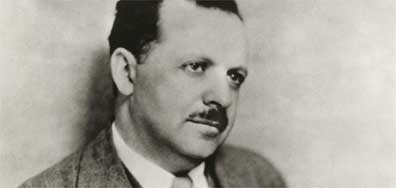
In “Happiness Machines,” Curtis focuses on Sigmund Freud’s American nephew, Edward Bernays, “the father of the public relations industry.” Bernays was the first to use Freud’s theories to manipulate the masses.

In fact, Bernays argued that such manipulation was necessary in a democratic society. Wikipedia quotes from his book, Propaganda (1928):

The conscious and intelligent manipulation of the organized habits and opinions of the masses is an important element in democratic society. Those who manipulate this unseen mechanism of society constitute an invisible government which is the true ruling power of our country. …We are governed, our minds are molded, our tastes formed, our ideas suggested, largely by men we have never heard of. This is a logical result of the way in which our democratic society is organized. Vast numbers of human beings must cooperate in this manner if they are to live together as a smoothly functioning society.

Of course it’s nonsense — however, Bernays had no difficulty making his theory a working part of American life; most importantly, the film notes, through “showing American corporations how they could make people want things they didn’t need by systematically linking mass-produced goods to their unconscious desires.”

According to Wikipedia, some of his ‘feats’ included:

  • In the 1920s, working for the American Tobacco Company, he sent a group of young models to march in the New York City parade. He then told the press that a group of women’s rights marchers would light “Torches of Freedom.”
  • Bernays once engineered a “pancake breakfast” with vaudevillians for Calvin Coolidge in what is widely considered one of the first overt media acts for a president.
  • Bernays used his uncle Sigmund Freud’s ideas to help convince the public, among other things, that bacon and eggs was the true all-American breakfast.
  • In October 1929, Bernays was involved in promoting “Light’s Golden Jubilee.” The event, which spanned across several major cities in the U.S., was designed to celebrate the 50th anniversary of Thomas Edison’s invention of the light-bulb (note: the light-bulb was in fact invented by Joseph Swan).
  • Bernays helped the Aluminum Company of America (Alcoa) and other special interest groups to convince the American public that water fluoridation was safe and beneficial to human health. This was achieved by using the American Dental Association in a highly successful media campaign.
  • In the 1930s, his Dixie Cup campaign was designed to convince consumers that only disposable cups were sanitary.

Wikipedia also points out that Bernays acted on behalf of “the multinational corporation United Fruit Company (today’s Chiquita Brands International) and the U.S. government to facilitate the successful overthrow (see Operation PBSUCCESS) of the democratically elected president of Guatemala, Jacobo Arbenz Guzman.” They labeled Arbenz a communist, as you can see here.

See below for part one of “The Century of the Self”. You can watch the remaining three parts at the Internet Archive

The Century of the Self: Happiness Machines

This entry is filed under , . If you found it useful, you can , Print it , or link to it using this code: . You may also want to follow any comments added by subscribing to this RSS Feed.

4 Responses to “The Century of the Self: Happiness Machines” (Leave a Comment ↓)

  1. Ainslie on July 13th, 2008 2:58 pm

    The influence of popular media can’t be denied; we are a culture glued to our TVs, radios, ipods, X-boxes, etc, taking it all in without question. (I’ve not had a TV since I left home at 18, and credit whatever degree of critical thinking I’ve got largely to this fact.)

    “Mind control” is always an interesting discussion because in a way, as individuals, we are almost always trying to sway someone else to our view of things, whether it’s which team has the better defense or who’s “right” on some political issue. Corporations, politicians, religious leaders, teachers, and car salesmen are always engaged in influencing the way others think.

    A (scary) film that documents the deliberate manipulation of public thinking in favor of mass consumerism (and therefore fosters mass production of consumer goods and profits for manufacturers) is “Zeitgeist”.
    http://www.zeitgeistmovie.com/ It’s about more than consumerism, but that’s a piece of a larger picture that’s quite frightening.

    A shorter, more succinct explanation is Annie Leonard’s “Story of Stuff”: http://www.storyofstuff.com/

  2. Tyler on July 13th, 2008 7:01 pm

    Manufacturing consent by Noam Chomsky is also good

    http://video.google.ca/videoplay?docid=-5631882395226827730

  3. Ahni on July 14th, 2008 10:18 am

    haha! Good on you Ainslie. I don’t have a tv either.

    “Mind control” is always an interesting discussion because in a way, as individuals, we are almost always trying to sway someone else to our view of things, whether it’s which team has the better defense or who’s “right” on some political issue. Corporations, politicians, religious leaders, teachers, and car salesmen are always engaged in influencing the way others think.

    That’s for sure. Most people would be shocked to know just how pervasive it is. Not only the games we play on each other, but on ourselves aswell. How few of our thoughts are really original, how we are tied to a social and intellectual framework that blinds us from everything on the outside — making anything that doesn’t fit “impossible” and “unbelievable”; or how authority figures in this society, like cops and doctors, get first-hand training in how to control situations and prey on conditioned responses (eg, when we see a red light, we respond by stopping.) There’s alot of stuff like this.

    Getting back to what you mentioned about how we trick each other, have you ever heard of logical fallacies, Ainslie? They’re ‘tools’ that we often use to win arguments or to get what we want. An example of a fallacy is “you’re with us or your with the terrorists,” or, say you have a friend with a drug problem and you confront him on it. He responds,” you’re one to talk;” or some silly racist says “all natives are drunks…”

    It’s good to understand these fallacies and how to ‘counter’ them; not just to win arguments, but so we don’t get distracted and so we can truely address issues. I think this is especially important in the case of indigenous people, because our issues are about needs — but “the right” only talk about wants… telling us that our needs our wants, and that their wants are our needs. It’s happening all over the place.

    ps, thanks for pointing out the movies. I might have a couple more to add on, but I got to go through them first.

  4. Ainslie on July 16th, 2008 12:38 pm

    Ahni,
    I’m not that acquainted with logic, but having read the link in your email, I can see how pervasive this type of (misleading) “argument” is, in politics, in advertising (is there a difference?? ;-), and as you point out, in our own mental chatter.

    Here’s another good example of misleading “press” that I got today:
    http://www.premier.gov.on.ca/news/Product.asp?ProductID=2353&Lang=EN

    The Boreal bird group that sent it to me counted it as a victory in protecting species and habitat, but you don’t have to read it too carefully to see that it’s really about mining and loggig development not protection. Given the history of provincial and federal governments working with First Nations to develop resource plans (e.g. Barriere Lake, elsewhere on this site), this is nothing but a facade hiding the real objective.


Creative Commons LicenseUnless otherwise indicated, articles on this site are licensed under a Creative Commons Attribution-Noncommercial-Share Alike 2.5 Canada License.