
24
Aug

Police in Ecuador evict 300 Indigenous families

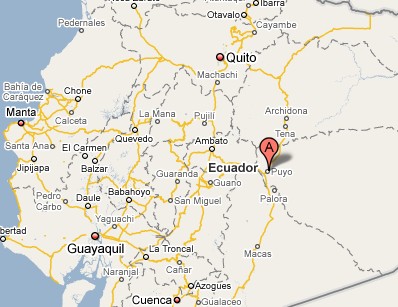
Anywhere up to 1,000 police officers in Ecuador were sent last week to evict 300 Kichwa, Shuar and Huaorani families from a 70-hectare lot of land which the Indigenous People had reclaimed early last year.

The officers used force to remove the families after they refused to leave on their own. At least one person was wounded by a gunshot during the eviction.

Members of the alleged owners of the land, a group of seven (non-indigenous) families, were present as well. According to some reports, they decided to take an active role in the eviction and ‘help out,’ by setting fire to the homes that the indigenous peoples built while waiting for government recognition of their ancestral title to the land.

Following the eviction, The National Indigenous Confederation of Ecuador (CONAIE), expressed its protest against the eviction, calling it an invasion, and saying, “[they] did not even give a space of 15 minutes for the owners to retrieve their things.”

Explained further in a press statement, CONAIE says the families had no foreknowledge of the eviction, but that it was in any case illegal because the land historically belonged to, and was occupied by the Indigenous Peoples.

Here’s a short video of the eviction, from Confirmado.net

[del.icio.us] [Facebook] [Hugg] [MySpace] [Newsvine] [Reddit] [Shoutwire] [Sphere] [StumbleUpon] [Twitter] [Email]

2 Responses ... read them below or Add One ↓


  • 1 Norman Whitten

    Please note that the occupation of this territory, once owned by Severo (Acevedo) Vargas, was in April, 2007. The indigenous people have been living there since then, had constructed their houses and were processing papers for formal ownership through all of the proper channels of government. In other words, they had been living there for 16 months before 1000 police massed to evict them, and absentee “owners” of land set fire to their houses and belongings.

  • 2 Indigenous Peoples advocate

    This is terrible, and I thought Ecuador was one of the better countries these days when it came to respecting indigenous peoples rights - at least in South America. Coming on the heels of the numerous impacts that these people have already had to deal with as a result of the oil drilling and exploration problems, it is simply unbelievable.

  • Leave a Reply


Video activism and the Chiapas Media Project

In the following presentation, Claudia Magallanes-Blanco from the University of Western Sydney talks about the role of video activism as a world-wide tool for empowerment and the Chiapas Media Project, a collaborative effort based in Mexico that provides indigenous Zapatistas in Chiapas and peasants in Guerrero with training and equipment to produce their own videos.

Since forming in 1998, CMP has distributed over 6000 videos, including: Zapata’s Garden, a film that looks at the society the Zapatista’s are building; …


I Am A Defender of the Rainforest

Known as ‘Soy defensor de la selva’ in Spanish, I am a Defender of the Rainforest is an award-winning documentary that was filmed, edited, and directed by members of the Sarayaku community in southern Ecuador.

The film shows how the …


Underreported Struggles #19, October 2008

In this month’s Underreported Struggles: 400,000 Guatemalans Reject Development Model, Philippines Indigenous People Unite for the Land, Riot Police Target Algonquin Blockade, Chagos Islanders Denied the Right of Return, and 17 other stories …


Hosted by May First / People Link