Hope and Terror in the land of the Jumma
An eerie calm has returned to the Chittagong Hill Tracts of Bangladesh, where, just two weeks ago , the military opened fire on the Indigenous Jumma People, killing 6 and injuring more than two dozen men, women and children.
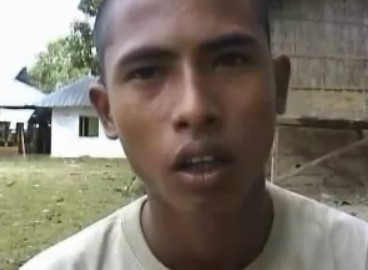
Sadly, painfully, it is not the first time the peaceful Jumma were put through such wretched violence, as we are reminded by this powerful clip from the documentary film, "Terrified voices."
Thousands of Jummas have been murdered, raped, arrested, crippled and arrested ever since Bangladesh emerged as a Nation state on December 16, 1971. Tens of thousands more have been displaced.
But even so, the Jumma have hope that one day peace will thrive on their land once again. Hope that they will be able to live without the constant fear of being raped or killed at any moment. Hope that they will be treated not as terrorists or diseased animals, but as human beings. Maybe even allies.
If only the government would respect the 1997 Chittagong Hill Tracts Peace Accord.
Please sign this petition urging Bangladesh Prime Minister Sheikh Hasina to bring Peace to the CHT http://cht-global-voices.com
To learn more about the Jumma, please visit www.jummapeoplenet.blogspot.com. For direct support, contact www.pcjss-cht.org


Below is a copied excerpt from this article report on initiative being taken amongst ASEAN countries to implement UNDRIP:
The full article is at:
http://indigenouspeoplesissues.com/index.php?option=com_content&view=article&id=1454:report-on-the-initiatives-in-the-promotion-of-the-undrip-in-asia-and-good-practices-in-the-exercise-of-indigenous-peoples-rights-2nd-session-of-the-expert-mechanism-on-the-rights-of-indigenous-peoples-emrip&catid=61:asia-indigenous-peoples&Itemid=83
This is section 25. from the report, :
“25. In 2005 in Bangladesh, after intense lobbying by indigenous activists and cooperation of concerned consultants and senior officials, extensive consultations were held with indigenous leaders from the plains regions and the Chittagong Hill Tracts (CHT) on the 2005 National Poverty Reduction Strategy Paper of Bangladesh (“PRSP-I”). Many of the recommendations of these leaders were accepted and the PRSP-I displays a respectful approach towards the rights and welfare of indigenous peoples. The term used to refer to the indigenous peoples is “Adivasi/Ethnic Minority”, which is far more acceptable to the people concerned than “tribal” or “upajati”. The document acknowledges the indigenous peoples’ history of exclusion and experience of discrimination.”
I wonder about the possible poor choice of ‘wording’ indicated with this report appearing to indicate that in the state of Bangladesh, indigenous peoples are officially referred to by the terms “Adivasi/Ethnic Minority”. I would wonder if this choice of terms being adopted by them may have the effect of precluding legal and other means & considerations of ensuring the protection of their rights as would be promoted by UNDRIP if they were ‘officially’ referred to the the state of Bangladesh as ‘indigenous peoples’? If they are ‘only’ referred to by the state as( and refer to themselves as) an ethnic minority of a state, it would seem that they would not be able to advance any claims of their indigenous rights.
I was more than a bit surprised to discover this choice of language aspect within this report, and I wonder how well aware of this importance of language/terms the Jumma and other indigenous peoples there are, & how well they have considered the uses and applications of these terms and what it might mean to their circumstances and struggles to maintain and advance their indigenous rights?
A bit of a delayed response here, Billy Jack, but, better late than never…
I think the term “Ethnic minority” definitely undermines the Jumma (and all Indigenous Peoples) because it forces them into the same camp as any group of immigrants. And that’s pretty much the root of the problem here, since the government is choosing to favour one “minority” over the other. They like the immigrants because they’re falling head over heels to be a part of the majority–and they’re viewing the Jumma as “Lesser” because they are not (and becasue they are “different” and because of old grudges and misperceptions). Really, the term has to go! And along with it, the government’s callous view of the Jumma.
The term Adivasi, though, is alot like Onkwheonwhe (Probably more like Aboriginal or American Indian. It’s Sanskrit for “origin dweller” or “original inhabitant”). It’s generally understand to mean “Indigenous People” though it has also come represent the Indigenous Population as an underclass (specifically in India). I’m not sure the view would change if the term was formally replaced, since “Indigneous Poeple” are also usually seen as an underclass, but it would definitely create a greater sense of inclusion in the international community, and give them greater leverage in their struggle for rights.
& the class~caste ‘system’ there is well known to be deeply ingrained, yet they, the ‘under-classes’, simply need to snap out of it, don’t they? And basically, I am just wondering if they really are aware of the importance of applying the correct language in their struggle for self-determination and their indigenous rights. They have been calling upon the world community to support them and so bringing their attention to these actually important applicable matters-instances of language and semantics is a part of it.
You know, there’s that saying, something like ‘all empire’s bear within them the seeds of their own destruction’, and well, this is what is unfolding concurrently as a twenty-first century reality for formerly oppressed-colonized indigenous peoples & our territories. You know, today in Bharat, colonial ideologies run very deep, it is like a carry over from the period of the British Empire days, and I think this is the point of what can be addressed…