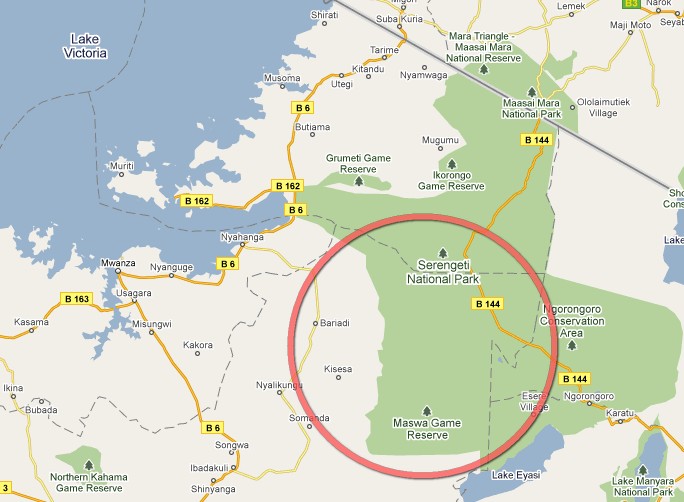
Hundreds of Maasai, Sukuma, Barbaig and Taturu pastoralists are refusing to leave the Maswa Game Reserve because of their historical ties to the land. The Tanzania government wants the pastoralists out of the reserve, which borders the world-famous Serengeti National Park, because of an all-too-familiar claim: “environmental degradation concerns”.
Below, an article by IPP Media about the pastoralists refusal.
Hundreds of pastoralists in Meatu District, Shinyanga Region, have refused to vacate Maswa Game Reserve, saying the government’s plan to kick them out will incite turmoil in the area. They said the government order is ‘baseless’ since the villagers have been living and grazing in the area for a number of decades.
Lukale villager Kapongo Ashisho, said the order is inhuman and cannot be implemented. “We’ll fight until the last minute to defend our rights…we have been here since our ancestors, who have been grazing cattle, goats and sheep, applying the same techniques,” Ashisho told journalists who visited the village.
He said that the pastoralists will not be easily kicked out of the area in the interests of some investors.
“Where can we go with our cattle; the government hasn’t provided to us any alternative” he said.
Based in Bukundi Ward, Lukale is one of the villages in the district that will be affected by a government eviction order issued to hundreds of villagers after it demarcated the area to create a Wildlife Management Area (WMA). The village is home to pastoralists from different ethnic groups – Sukuma, Maasai, Barbaig and Taturu.
Kidawida Kitiyani, another pastoralist from the village, expressed fear that the operation would likely incite hostility between them and the government.
“As pastoralists, we’ll not leave this area. These people (government) have their own agenda — to grab our land for an unknown reason,” he said.
He said Meatu District Authority had better stop implementing the operation to avoid the anticipated hostility.
Querying the implementation of the plan, Odamwe Hereda, who is a mother of ten said:
“Whose interests do the Wildlife Management Areas represent?”
When establishing the WMAs the people were not involved, she said.
“These WMAs are not friendly to the pastoralists. They are pro-investors and I don’t know why the government is engineering these kinds of projects that favour aliens on our land?” another villager, Utamba Girigisi, asked.
90-year-old Gisawa Girokuma from the Barbaig ethnic said the government’s order was as good as daylight dreams.
“We have been here for more than 50 years, without any problem. Why are they chasing us out now?” he queried.
Most of the Lukale villagers are pastoralists, save for few immigrants who only engage in salt harvesting on the shores of Lake Eyasi.
Mwabagimu villager Magdalena John (50) also asked why the government is ordering them to leave the area without showing them where to go.
“There is a need for the government to sit down with us and sort-out the problem before implementing the operation. We are human being and not animals,” another villager, Shija Milanda, said.
He added that the pastoralists need to be respected and recognised because like other human beings, they have their own requirements.
Nasa Maganga said: “We are here because there are areas for grazing, farming and for other social facilities. Now why is the government silent on whether there is another area allocated for us?”
Bukundi Ward Councillor Joseph Gamnana Masibuka who is a resident of Mwabagumu village said: “People here aren’t ready to vacate their homeland; they are ready to die here.”
Narrating the ordeal, Masibuka said the conflict started in 1998, when the government came up with the idea of establishing WMAs.
“Thereafter, it demarcated boundaries without involving the indigenous people,” he said.
Responding to the villagers concerns, the village executive officer, Paul Zablon Matendele, said he received the order from the DC’s office on the need for the pastoralists to vacate the area before the end of next month.
“I have already conveyed the order to the villagers,” he said.
Meatu MP Meshack Jeremiah Opurukwa confirmed this, saying his office is working on the matter.
“I am aware of the order, but we’re still working on it,” he briefly said.
At least 500 pastoralists in the district, who collectively own more than 213,000 heads of cattle, will be affected by the order to vacate the game reserve, where they have been living for almost five decades.
In January this year, district authorities issued a six-month notice for pastoralists to quit the area on environmental degradation concerns.
Meatu District Commissioner Abihudi Saideya said last week that pastoralists were given enough time to voluntarily leave the protected area.
“They have invaded wildlife management areas (WMAs) which are against the laws,” DC Saideya told journalists from different media outlets who visited the district.

Indigenous Peoples are putting their bodies on the line and it's our responsibility to make sure you know why. That takes time, expertise and resources - and we're up against a constant tide of misinformation and distorted coverage. By supporting IC you're empowering the kind of journalism we need, at the moment we need it most.