Press Release

Muscogee (Creek) Nation Sues to Stop Casino Development on Sacred Burial Grounds

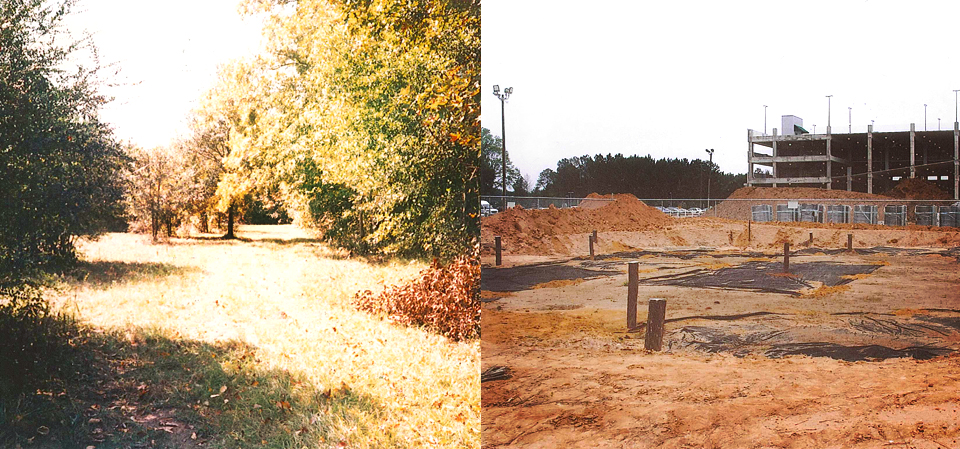
(Montgomery, Alabama) December 12, 2012 – The Muscogee (Creek) Nation filed a federal lawsuit to stop the construction of a casino on its historic ceremonial and burial grounds, known as Hickory Ground, located in Wetumpka, Alabama. Filed on December 12, the suit claims that the Poarch Band of Creek Indians excavated approximately 57 sets of human remains and relocated the burials in April of this year to develop a $246 million casino on sacred land.

Hickory Ground is listed on the National Register of Historic Places because it was the last capital of the Creek Nation before forced removal to Indian Territory (now Oklahoma), and because previously undisturbed Muscogee burials are located there.

The federal complaint, filed in the U.S. District Court for the Middle District of Alabama, asserts that:

  • Poarch Band acquired Hickory Ground under the false pretense of preservation.
  • Poarch Band promised to protect the archeological remains at Hickory Ground against excavation and received a federal historic preservation grant to acquire the property in 1980.
  • Poarch Band violated a preservation covenant by developing a casino on Hickory Ground.
  • the lineal descendants of the exhumed ancestors–who are known as “Hickory Ground Tribal Town” or Ocevpofv in the Muscogee language–never consented to the excavation, and such consent is required by the Native American Graves Protection and Repatriation Act.
  • ceremonial and burial grounds should be protected under the American Indian Religious Freedom Act, which also requires consultation with traditional religious leaders, the Ocevpofv leaders, in this instance.
  • Auburn University contracted with Poarch Band to excavate the remains.
  • U.S. Interior Department failed to fulfill statutory and fiduciary duties to protect the burial grounds.

The lawsuit is filed against Poarch Band and its officials, construction contractors Flintco, LLC and Martin Construction, Inc., Auburn University, and the U.S. Department of Interior.  The lawsuit seeks preservation of Hickory Ground, and does not seek money damages.

“From the beginning, it has been our stance that the remains should be put back where they were excavated,” said Mekko George Thompson, who has served as a traditional Muscogee Chief of the Hickory Ground Tribal Town for 42 years.  “The ceremonial ground is sacred, so it is not a proper place for a casino,” Thompson added.

Poarch Band was not federally recognized as a tribe until 1984 and descends from Creek Indians who received a land grant in Tensaw, Alabama, as a reward for assisting the United States to fight against and remove the Creek Nation from Alabama in the 1830s, according to the lawsuit.  The Poarch Band operates three casinos, including the Wind Creek Casino in Atmore, the Creek Casino Montgomery and the Creek Casino Wetumpka, according to its website. The planned expansion of the Wetumpka casino would include a 20-story hotel with 285 rooms and a 90,000 square foot gaming floor with more than 2,500 electronic gaming devices, according to an announcement reported by the Atmore Advance.

The Muscogee (Creek) Nation, based in Okmulgee, Oklahoma, is a federally recognized Indian tribe with approximately 70,000 citizens.  Hickory Ground Tribal Town, or Ocevpofv in the Muscogee language, is a traditional ceremonial ground that is part of the Muscogee (Creek) Nation and its members are the lineal descendants of the historic Hickory Ground sacred land in Wetumpka, Alabama, according to the lawsuit.  The Muscogee (Creek) Nation, Hickory Ground Tribal Town and Ocevpofv chief Mekko George Thompson are plaintiffs in the lawsuit.

For more information, please contact attorney Brendan Ludwick at (888) 929-9602 or visit www.SaveHickoryGround.org.

  • John Ahni SchertowJohn Ahniwanika Schertow is an indigenous rights activist of Mohawk (Kanienkehaka) and mixed-European descent. For the past 8 years, he has served as the e... read full bio

One thought on “Muscogee (Creek) Nation Sues to Stop Casino Development on Sacred Burial Grounds

  1. Chief Tom Dostou

    Native Peoples are fighting for our lands and way of life in Canada, the US and in Central and South America while these greedy people are desecrating their own ancestors//you can’t blame the white man for this!

    Reply

Leave a Reply

Connect with us

Get our latest articles by email!


I blows my mind to witness this behavior from people's whom run this country and the USA! They ( the so called leaders of countries) should be the ones leading...
Not to mention the fact that Indigenous Peoples have specific needs that settler populations generally do not posses, like requiring access to specific land areas to maintain culture, language, the...
It's true in a sense--we're all indigenous to somewhere--however, there are fundamental differences between populations who identify as "indigenous" and those who no longer follow a traditional way of life....
There is a need to recognize that all people are indigenous to this planet. We are one human race beholden to the mother that nurtures us. We must unite under...
Well, I think, unfortunately, passive complaints of PM Harper selling our land & water for basically nothing, are getting nowhere. Time to move up the ladder of complaining. Watch your...
It is instructive to see how mental, spiritual and physical health coincide in the indigenous philosophy, while the progressive view remains trapped in a treatment rather than preventive mode. It...
Kia ora, I would like to say unless they, ( those who say no more Full- Blooded Maori), know the whakapapa of every single Maori in Aotearoa, they should just...
Mohawk??I stand and prepared to back my people at any and all cost...
Who are the Muscogee
B2N04 - Muscogee StorytellerThe Muscogee (or Muskogee), also known as the Creek or Creeks, are a Native American people traditionally from the southeastern United States. Mvskoke is their...
Learn more about the and other Indigenous Peoples around the world

"In a media landscape made up of lies, flash, giant blind spots and corporatized sites of distraction, Intercontinental Cry is a trustworthy pathway to the truth where people who are committed to understanding Indigenous realities can gain insight and information to illuminate and activate their struggles."

Taiaiake Alfred
Professor of Indigenous Governance at UVIC and author of Wasáse
Hair of the Dog